

The Federal Government is to set up a committee comprising relevant stakeholders to assess the three-year Petroleum Industry Act (PIA ) in order to know whether it has lived up to the reasons why it has come to be.
The committee will look at the various subsectors in the petroleum industry and see how the Act has impacted them so that necessary adjustments could be made to make the act effective.
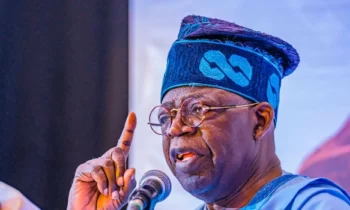
The permanent Secretary of the Ministry of Petroleum, Ambassador Gabriel Adudu disclosed this at the ongoing OTL2023 holding in Lagos.
The Ambassador who gave a goodwill address to participants at the event said that the theme for this year, “Energy, Synergy, and New Beginnings,” resonates profoundly with the ongoing transformations in the world of the oil and gas industry.
According to him, in this dynamic era, where the energy landscape is evolving rapidly, he said it’s crucial that we embrace the spirit of synergy. “Our industry is no longer confined to traditional boundaries; it is about collaboration, innovation, and adaptability. The challenges we face are not unique to any single entity, but shared by all. Together, we can overcome them and pave the way for a brighter, more sustainable future.”
The energy sector, he explained, is witnessing a renaissance of sorts, heralding new beginnings, stating that as we move towards a more sustainable, eco-friendly future, our industry must lead the charge. “We are not merely oil and gas experts; we are custodians of change. It is our responsibility to shape a future where energy is clean, accessible, and equitable for all.”
“Nigeria, as a significant player in the global energy landscape, faces the challenge of balancing its hydrocarbon-based economy with the need to transition towards cleaner and more sustainable energy sources. While much attention has been focused on the upstream sector (exploration and production) in discussions about energy transition, the downstream sector, which involves refining, distribution, and marketing of petroleum products, plays a crucial role in this transition.”
“The downstream sector in Nigeria plays a pivotal role in the country’s energy transition. To successfully shift from a hydrocarbon-based economy to a more sustainable and diversified energy landscape, Nigeria must address the challenges faced by this sector while leveraging its potential. Infrastructure development, laudable as the Presidential Initiative on CNG is for example, we must be careful not to put the cart before the horse, we need the buses, we need the converters but then where is the gas?”
“ This important question can best be answered by the members of the OTL who must work with the government to expand trunk and distribution gas pipelines across the country; the supply and distribution of refining capacity expansion; supportive regulations; renewable energy integration; and workforce development are key areas that require attention. The downstream sector’s ability to adapt and embrace clean energy alternatives will be a determining factor in Nigeria’s energy transition success.”
“This event, with its strategic conference, exhibitions, networking, and market insights, is a testament to the collective commitment of industry leaders, innovators, and policymakers. It’s a platform where ideas are exchanged, partnerships are forged, and, most importantly, where the seeds of progress are sown,” he said.